
How to spot member churn before it happens (using data you already have)
Most gym and studio churn reports only show who already left. Build a weekly attendance-decay signal from booking data that flags at-risk members weeks earlier.
- retention
- churn
- attendance
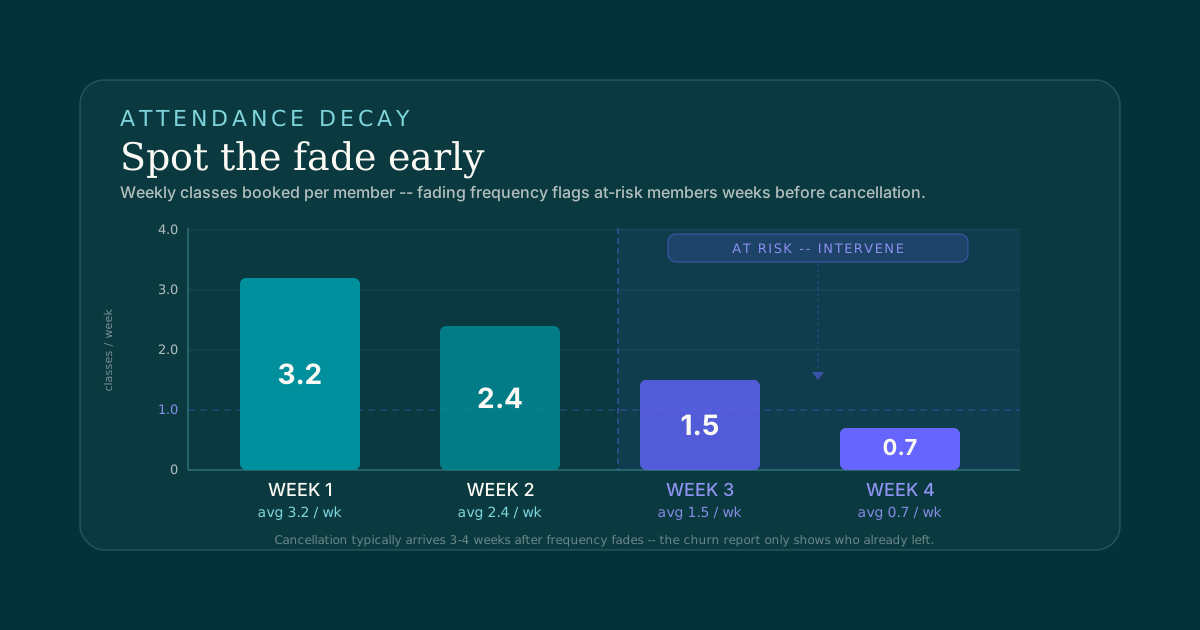
By the time your booking platform tells you a member is at risk, they have usually already decided to leave.
That is not a knock on Mariana Tek, MindBody, or PushPress. Their default reports are backward-looking. They tell you who cancelled last month, or who has not shown up in 30 days. Useful for record-keeping. Not useful for retention.
The signal that predicts a cancellation sits in your data weeks earlier. You do not need new software or a data team. You need one recurring query against reservation history.
The problem: churn feels sudden, but it is not
Nobody quits a studio overnight after a year of attendance. Three classes a week becomes two, then one, then I will get back into it after the holidays. By the time the cancellation processes, the member checked out mentally weeks earlier.
Owners feel this for members they know by name. It does not scale across locations or a growing roster without a trend, not a snapshot.
Why it is hard to see in day-to-day reports
Booking platforms answer who is active, who cancelled, and who has not visited in X days. None of those answer whose attendance pattern just started bending downward.
That pattern lives in reservation history joined over time. Most front desks and owner dashboards are built around snapshots, not rolling trends.
How to find it in your data
- Pull reservation history per member for at least 8-12 weeks.
- Calculate a 4-week rolling average of classes attended per week for each active member.
- Flag anyone whose rolling average dropped by roughly half from their own baseline (for example 3 classes a week down to 1).
- Run the job weekly. A one-time snapshot includes people who were always low attendance. A trend shows who is changing.
What to do about it
- Personal check-in from someone who knows them, not a generic blast.
- Schedule nudge with a specific alternative class time if their old slot stopped working.
- Small incentive timed to the fade, not months after they have already left.
Operationally this can be a weekly list in Klaviyo, a staff Slack channel, or a spreadsheet the front desk reviews Monday morning. One query, one delivery mechanism.
3-4 weeks
Typical lead time between attendance decay and a voluntary cancellation
If you want to see what your studio's decay curve looks like from your own booking data, we can look at it together.